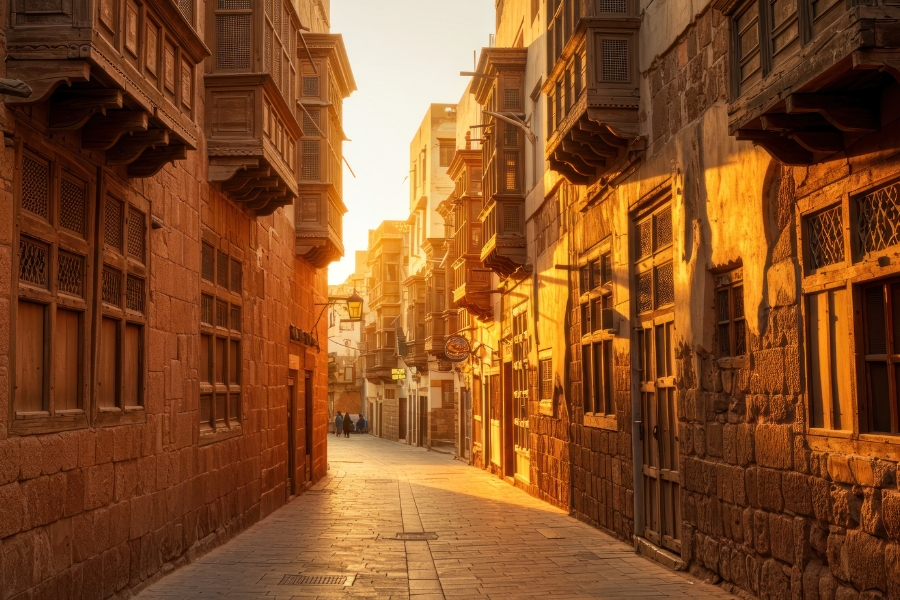
Al Balad is one of the most important Jeddah tourist attractions, known for its coral-stone houses, wooden balconies, and deep cultural history. If you are planning a trip to Jeddah, renting a car gives you freedom, comfort, and convenience. Many travellers enjoy having their own vehicle as they move between historic sites, markets, and museums. This Al Balad travel guide will help you explore the historic district of Jeddah.
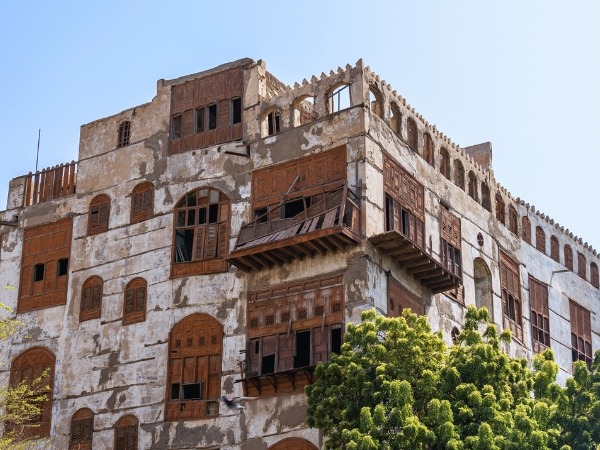
Al Balad is an open-air museum where heritage buildings, old markets, and traditional homes still stand. Understanding these basic points will make your visit easier, safer, and more meaningful. Al Balad, which means “the town,” is the oldest part of Jeddah. It was founded in the 7th century and became the main port for traders and pilgrims travelling to Makkah. The area grew quickly because merchants from Africa, Asia, and the Arabian Peninsula all passed through this ancient port. As a result, Al Balad became a lively place where cultures mixed for hundreds of years.
Today, Al Balad is protected as a UNESCO World Heritage Site, recognised for its unique coral-stone houses, traditional wooden windows called rawasheen, and narrow streets full of life. Many buildings are more than 500 years old, and several neighbourhoods — such as Al-Mazloum, Al-Sham, Al-Yemen, and Al-Bahr — have their original designs. When you walk through these streets, you will see the same patterns, carved wood, and stone walls that people saw centuries ago. Although Al Balad is a very old district, it is now undergoing major restoration projects.
Al Balad is also a lively social space. During the day, you can hear the sounds of markets, bakers, and shop owners calling customers. At night, the streets brighten with festivals, rooftop cafés, and art displays from local and international artists. Whether you visit in the morning or evening, the energy of the district always feels special. Most importantly, exploring Al Balad teaches you about the early life of Jeddah and how the city grew over time. When you travel by car, you can easily move across the different neighbourhoods, enter restored heritage houses, and stop at beautiful viewpoints
Before entering Al Balad, it is important to understand the main access points, road layout, and parking options. The district is located in the older part of Jeddah, where streets can be narrow and congested.
Al Balad lies in the central-southern part of Jeddah, close to the Red Sea. The entire heritage area covers around 2.5 square kilometres, making it compact but full of important sites. If you drive from King Abdulaziz International Airport, expect a 30 to 40-minute journey. From the Corniche, the drive takes around 15 to 20 minutes. Travellers staying in central Jeddah can reach Al Balad in 10 minutes.
Travelling by car gives you direct access to Al Balad’s outer streets. From the airport, the fastest route usually follows the main highways south until you approach the old town area. From the Corniche, you simply drive inland toward the heritage district until you reach the market zone. Many travellers enter through Bab Jadid, one of the historic gates.
As Al Balad is a UNESCO World Heritage Site, many of its inner streets are pedestrian-friendly. Cars are not allowed deep inside the narrow alleys, but you can park along the outer edges of the district. Popular parking zones are around Al Dahab Street, near Bab Makkah Souq, and along the main streets close to the markets and restored heritage houses. These areas give you quick access to shops, museums, mosques, and cultural sites.
Al Balad is livelier during the evenings, when shops and cafés open and locals enjoy the cooler air. This means traffic increases around sunset. If you prefer lighter vehicle flow and easier parking, arrive during early morning or just before late afternoon.
Before you begin your journey by car, it is helpful to understand the basic rules, navigation habits, and local customs in Jeddah. Al Balad is a historic area with narrow streets, old houses, and pedestrian zones, so driving is slightly different from modern parts of the city.
Renting a car in Jeddah is a simple and often practical way to visit Al Balad. Rental companies are easily accessible across the city and at the airport. Most travellers choose compact or mid-sized cars because these vehicles are more manageable on the narrow streets around Al Balad. When renting a car, you should have a valid driving licence, your passport, and rental documents. Many cars include a built-in GPS system, which is helpful if you are new to the area.
Navigation apps work very well in Jeddah, and they make it easy to reach Al Balad even if you have never visited before. One of the best locations to enter the district is Bab Jadid because it is well marked on maps and widely recognised by drivers. Other useful destinations to search for include Bab Makkah Souq, Al Dahab Street, and the Nassif House Museum. These landmarks are near the edges of the district, making them convenient places to park by car. Navigation apps also help you avoid the pedestrian-only lanes inside the historic neighbourhood.
Al Balad is best explored slowly. The inner streets are narrow and full of historic architecture, so most travellers prefer to park at the edge of the district and continue on foot. This itinerary will guide you through the most important places, helping you understand the Jeddah tourist attractions within the heritage zone.
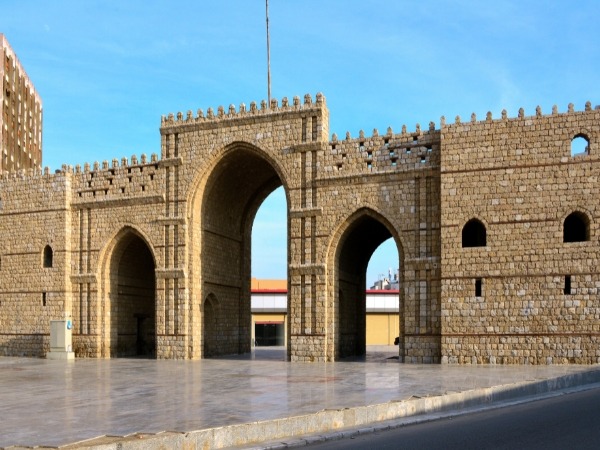
Bab Jadid, or the New Gate, is one of the easiest locations to reach when arriving by car. Because it is located beside a main road, taxi drivers, navigation apps, and visitors find it a convenient starting point for their tour. When you arrive here, you step directly into the old part of Jeddah, where the coral-stone buildings and wooden rawasheen immediately set the mood. Bab Jadid is also close to open parking spaces.
As you walk deeper into the district, you will notice several restored heritage hotels and houses. These historic buildings have been carefully repaired by local artisans, carpenters, and historians. Many of these structures follow the traditional Hijazi pattern, using coral stone, teak wood, and carved window screens. The restored properties show a mix of traditional features and modern comfort, allowing visitors to understand how wealthy families once lived. These heritage buildings also represent the future of Al Balad, where restoration projects continue to revive abandoned homes as cultural spaces.
A short walk from the main gate brings you to the lively souks of Al Balad. Souq Al Alawi is one of the oldest markets in the Kingdom. As you explore this area, you will find textiles, spices, perfume oils, lanterns, jewellery, and handmade crafts. The Gold Souk is especially famous for traditional designs, while Attarin Souk is known for perfumes, incense, and oils. Walking through the markets is one of the most enjoyable things to do in Al Balad.
Nassif House Museum is one of the most important historic homes in Jeddah. Built in the late 1800s, it once served as the residence of King Abdulaziz during his visits to the city. The building has more than one hundred rooms and is known for its impressive rawasheen, carved doors, and Arabic calligraphy. Inside, you will find collections of old furniture, photographs, ceramics, and objects used by wealthy merchant families. A large tree beside the house is believed to be the oldest in Jeddah.
Matbouli House Museum is a privately owned historic residence located on Al-Qossani Alley. The house belonged to a family of spice merchants for more than 400 years and has been preserved with great care. Inside, you will find antique furniture, old gramophones, pottery, and traditional household tools. The narrow staircases and wooden floors evoke a genuine sense of how families lived centuries ago.
Al-Shafi’i Mosque is believed to be more than 1,400 years old, making it the oldest mosque in Jeddah. The building features coral limestone walls, wooden beams, and a marble courtyard. Its minaret, which dates back around 800 years, is one of the oldest in the region. Inside the mosque, the marble pillars are believed to have been brought to Jeddah by Ethiopian traders. This site reflects the deep spiritual heritage of Al Balad, and even if you do not enter, viewing it from the outside gives you a strong sense of the district’s religious history.
As you continue walking through the district, you may come across the remains of the old Jeddah wall. These walls once protected the city from invaders and formed a complete defensive circle around Al Balad. Today, only a few sections remain, but they still carry historical importance. You may also notice other gates besides Bab Jadid, such as Bab Makkah, which connected Jeddah to the route leading to the holy city.
A visit to Al Balad is not complete without seeing the old waterfront. Although the modern Corniche is located farther north, the original seaside area near Al Balad offers beautiful views of the Red Sea. Traditional fishing boats can sometimes be seen, reflecting Jeddah’s maritime history. The waterfront also provides a peaceful break from the busy souks and allows you to observe the connection between the district and the sea.
In recent years, Al Balad has evolved into a cultural hub, hosting a range of art events, festivals, and exhibitions. One of the most notable programmes is Balad Al-Fann, a grassroots arts initiative that brings together painters, sculptors, digital artists, musicians, and performers. International and local artists have displayed work in historic houses such as Sharbatly House, Zainal House, and Gotta House. Some displays even blend digital and physical art, such as the pink-draped building created by Andrés Reisinger.
When you explore Al Balad on foot after parking your car, you will notice many architectural and cultural details that make this district unique. Understanding these features helps you recognise why Al Balad is one of the most valuable Jeddah tourist attractions.
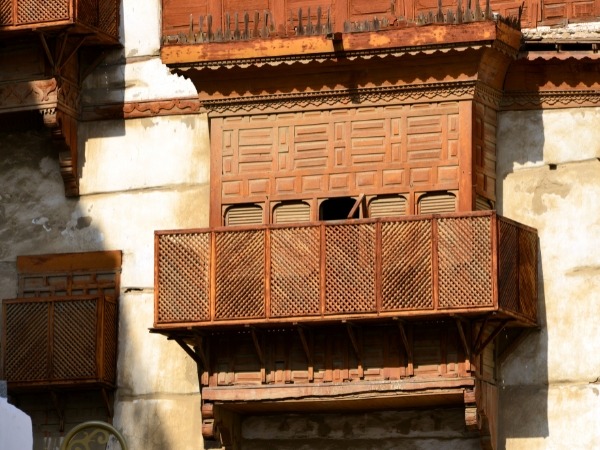
One of the most distinctive features of Al Balad is the rawasheen, also known as mashrabiya. These are the wooden window screens that project outward from the walls of traditional homes. They are usually made of teak wood and are carefully carved with artistic patterns. Rawasheen are not only beautiful; they also serve an important function by allowing air to move through the rooms and keeping houses cool during the hot summer months. Women could look outside without being seen, adding privacy while still letting them observe the street.
Many buildings in the Jeddah historical district were built using coral blocks cut from the Red Sea. This building material, known for its strength and insulation, kept homes cool and protected them from the intense heat. These coral houses are sometimes called Bayt Al-Bag or Bayt Al-Sha’ar. You can see these coral stones in their natural form on older or unrestored buildings, while restored houses are often coated but still follow the same structure.
Al Balad is divided into several historic neighborhoods, each with its own unique story and character. The Al-Mazloum neighbourhood is home to many important mosques and heritage houses, including the Al-Shafi’i Mosque. The Al-Sham neighbourhood is known for buildings belonging to old merchant families, such as Dar Al Banaja and Al Zahed House. The Al-Yemen neighbourhood is home to notable structures such as the Nassif House and Jamjoom House, making it rich in traditional architecture and history. Al-Bahr neighbourhood is situated close to the waterfront, showcasing the connection between old Jeddah and the Red Sea.
Al Balad features hundreds of historic houses, many of which remain standing with their original designs. Sharbatly House is one of the most beautiful examples of the Hijazi style, featuring stunning wooden balconies. Baeshen House features old photographs, documents, and a small mosque within its courtyard. Jamjoom House and Banaja House are also notable examples of coral-stone architecture, belonging to influential merchant families. Zainal House has hosted several cultural events and exhibitions under the Balad Al-Fann programme.
Exploring Al Balad lets travellers hear the echoes between the coral-stone walls and walk through centuries of stories. What makes this experience special is not just the architecture or the souqs, but the rhythm of the place. By self-driving, you can explore slowly, pause at a historic house that catches your eye, or sit quietly near a mosque and listen to the sounds of the old city settling into the evening.
When you book a car with Final Rentals, you can pick up your vehicle at King Abdulaziz International Airport or Madina Road in Al Bawadi District. Select the pick-up and drop-off point, choose a vehicle, and confirm your booking. There are no hidden fees, no cancellation penalties, and support is available 24/7 at major airport locations. For extra convenience, you can also download the Final Rentals app on Google Play and the App Store.