Finalrentals Blog

Published in Explore Category.
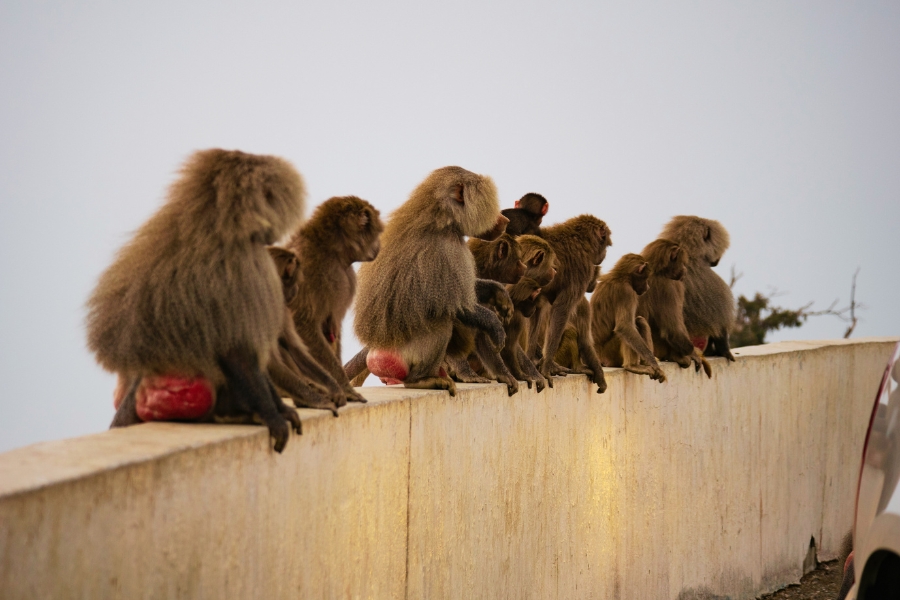
Saudi Arabia is home to the Hamadryas baboon, the only wild monkey species in the Arabian Peninsula. These baboons roam the country’s western highlands and have thrived in the Kingdom’s rugged landscapes for thousands of years. In fact, Saudi Arabia is one of the best places in the Middle East to see wild baboons in their natural habitat, thanks to its extensive mountain ranges and protected parks. Renting a car in Saudi Arabia makes it easy to reach these areas. This guide will show you where to find wild baboons, the best time to see them, and how to observe them safely.
Where Are the Wild Baboons in Saudi Arabia?
Wild baboons are part of Saudi Arabia’s wildlife, especially in the mountainous west and south-west. If you’re wondering where to see baboons in Saudi Arabia, their range is fairly well defined and closely tied to specific landscapes.
Species Found in Saudi Arabia
The baboons found in Saudi Arabia are Hamadryas baboons (Papio hamadryas), sometimes referred to as Arabian or desert baboons. They live in large, complex social troops and are easily recognisable. Males have a striking silver mane, while both sexes have grey-brown fur and strong builds. Adult males can weigh up to 30 kg and possess long canine teeth.
Native Range and Main Regions
Hamadryas baboons are native to the south-western Arabian Peninsula, and Saudi Arabia hosts one of the largest populations in the region. They are most commonly found in the Sarawat Mountains, which run parallel to the Red Sea from the Yemeni border northwards.
Areas include Taif (Makkah Province), Al-Baha, Asir, Jazan, Najran, and parts of Madinah Province. These highlands have rocky cliffs for sleeping and valleys with water sources. These are the conditions baboons rely on and which are absent in most desert regions.
Population and Human Interaction
Wildlife surveys suggest there are tens of thousands of baboons in Saudi Arabia, with hundreds of known hotspots, many near farms, villages, and mountain roads. This proximity explains why travellers often spot baboons along scenic routes or picnic areas.
Ecological and Cultural Context
Ecologically, baboons help disperse seeds and control insects, contributing to mountain biodiversity. Culturally, they have long coexisted with people but were historically overlooked in folklore. Visitors should always remember that these are wild animals in Saudi Arabia and should never be fed or approached closely.
Best Places to See Wild Baboons in Saudi Arabia
Baboons in Saudi mountains are most commonly found in Saudi Arabia’s western highlands, particularly within the Sarawat mountain range. These areas feature green valleys, steep cliffs, cooler climates, and diverse wildlife, making them ideal habitats and best explored by car for flexibility and scenic mountain drives.
1. Taif and Al-Hada Mountain Road
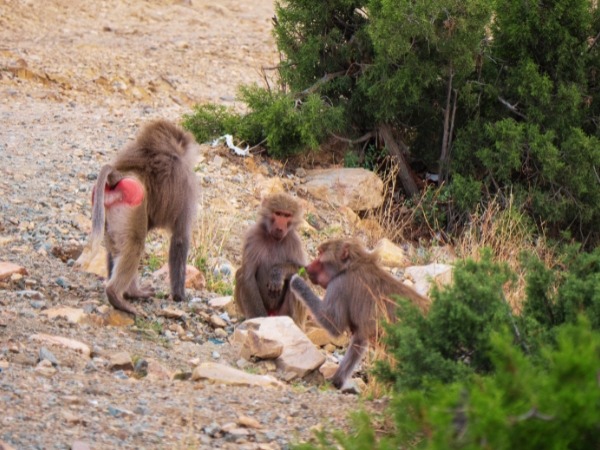
Taif is one of the most famous baboon hotspots in Saudi Arabia. This city is about 1,900 metres up in the mountains near Mecca, is surrounded by baboon territory. Taif’s roses and pleasant weather are a popular vacation city for Saudis, and the baboons have almost become a tourist attraction of their own. In particular, the Al-Hada Mountain Road (Highway 15) just northwest of Taif is legendary for its baboon sightings.
As you drive the winding Al-Hada road, you will often see dozens or even hundreds of baboons along the roadside. Taif’s cooler highland climate and picnic spots have made it a magnet for baboon troops, and over the years, they have become very accustomed to people.
Drivers often pull over at scenic viewpoints on Al-Hada, where baboons boldly approach cars looking for food. The best time of day to spot them here is usually early morning or late afternoon, when the weather is cool, and the baboons are actively foraging. They rest in the heat of midday. At dawn, you might catch them descending from their cliffside sleeping spots. Towards dusk, they start gathering near the roads again, hoping for snacks from visitors.
Keep your car windows closed and avoid holding out food. Along Al-Hada road, you’ll see signs in Arabic and English warning “Do not throw food to the animals”. Unfortunately, many people ignore this, and drivers routinely stop to toss fruit and leftovers to baboons, which causes big groups of baboons to scramble onto car hoods and roofs.
There are pull-off parking areas on Al-Hada so tourists can watch the baboons safely from a distance. Use those designated spots rather than stopping in the middle of the road. Also, secure any bags or shiny objects. Baboons are clever and known to snatch plastic bags or anything that looks like it might contain food.
Aside from Al-Hada, Taif has other baboon hangouts, such as local parks and valleys. For example, troops of baboons often raid garbage bins in places like Ruddaf Park or Wadi Liya on the edge of Taif. If you visit Taif’s parks in the early morning, you might see baboons scavenging leftover food before the park staff chase them off.
2. Asir National Park
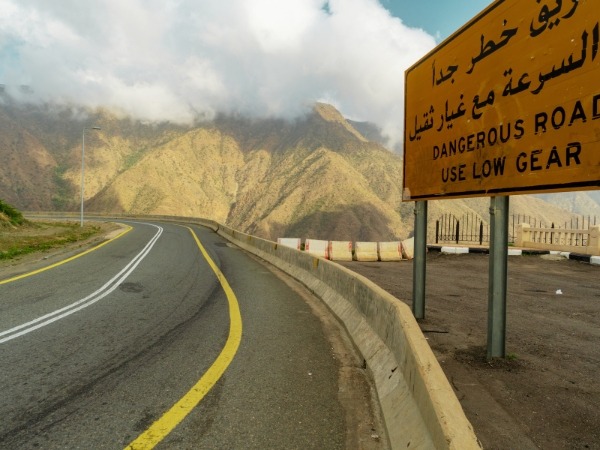
Asir National Park is one of the best places for travellers seeking the best wildlife experiences in Saudi Arabia. Located in the south-west near the city of Abha, the park is Saudi Arabia’s largest protected area, spanning nearly 6,500 km² of rugged mountains, deep valleys, and forested plateaus.
Unlike most of Saudi Arabia, Asir features dense juniper forests, mist-covered ridges, and elevations reaching almost 3,000 metres at Jabal Sawda, the country’s highest peak. These conditions create an ideal habitat for Hamadryas baboons.
Here, baboons live far from urban centres, moving through forests, cliffs, and escarpments much as they have for centuries. Hikers often spot them along trails, while campers may see troops foraging quietly among trees or resting on rocky outcrops.
One of the most reliable areas for sightings is Jabal Sawda (Al-Soudah), near the scenic viewpoints, cable car station, and mountain roads. Baboons are frequently seen near parking areas and picnic spots, as they have learned that visitors sometimes carry food.
Keep food securely packed, avoid feeding them, and never approach too closely. Summer is generally the best time to visit, as winter can bring fog, cold temperatures, and even light snow at higher elevations.
3. Al-Baha Region
The Al-Baha region is another excellent place to encounter wild baboons. It offers a quieter, more remote experience than Taif or Abha. Located north of Asir, Al-Baha lies along the same mountain chain and is often nicknamed the “Garden of the Hejaz” for its greenery, terraced valleys, and cooler climate. Baboon troops are present across all districts of Al-Baha, particularly throughout the highlands where forests, cliffs, and water sources provide ideal conditions.
Because the region receives fewer tourists, baboon encounters here often feel more natural and less staged. You may spot them along quiet mountain roads, on rocky slopes, or near farms and villages where they occasionally raid fruit trees or bins.
One of the best-known locations is Raghadan Forest Park. This large juniper forest park is located on a cliff edge and is officially promoted as a place to observe baboons in their natural habitat. Well-marked walking paths allow you to watch baboon families grooming, playing, or foraging among the trees. Park guides are sometimes available and can explain baboon behaviour
Beyond Raghadan, Al-Baha offers scenic highlights such as Dhee Ayn (Zee Ain), a striking marble village perched on a rocky hill, and Jabal Shada, known for its rugged terrain and ancient caves. While exploring these sites, you may see baboons on distant slopes or crossing roads, especially in the early morning when troops are most active.
4. Sarawat Mountains (Remote Areas)
Stretching along the western spine of Saudi Arabia, the Sarawat Mountains offer some of the most authentic and adventurous baboon sightings. This vast mountain range stretches for roughly 800 kilometres, from north of Taif to the Yemeni border.
Routes between Al-Baha and Abha, as well as quieter backroads around Tanomah, Al-Namas, and Baljurashi, are known for baboon sightings. Here, troops are frequently seen perched on cliffs, moving through juniper groves, or crossing mountain roads. Because these areas are less influenced by tourism, the baboons behave more naturally, foraging on wild plants, digging for roots, and hunting insects rather than seeking food from people.
In these highlands, you may observe classic baboon social behaviour. Large troops often spread across hillsides, with a dominant male acting as a lookout from a rock or ridge. Grooming, play among juveniles, and coordinated movement through the terrain are common sights if you watch quietly from a distance. The dramatic backdrop of rugged peaks and stone villages makes these encounters especially memorable.
The roads to Sarawat Mountain are steep, narrow, and winding, so a well-maintained vehicle and confident driving skills are essential. Stay alert, as baboons may suddenly cross the road. Early morning and late afternoon are the best times to explore, when baboons are most active, and temperatures are cooler. Water sources such as springs and shaded valleys are also good places to spot them.
5. Jazan Highlands
At the far south-west corner of Saudi Arabia, near the Yemeni border, the Jazan Highlands offer one of the most atmospheric places to see baboons in the country. This region is famed for its lush, cloud-wrapped mountains, terraced farms, and rich biodiversity that feels almost tropical compared to much of the Kingdom. Peaks here range from roughly 2,000 to 3,000 metres above sea level. If Jazan is your starting point, you can rent a car at King Abdullah bin Abdulaziz International Airport.
The Fifa Mountains are especially well known for baboon activity. Troops live among the steep terraces where locals grow coffee, fruits, and grains. Baboons are frequently spotted moving along stone walls, resting on cliffs, or sneaking into plantations to raid crops. Because farmers regularly chase them away, these baboons are clever, alert, and quick to retreat.
Jazan’s forests are thick with life. While exploring, you may hear hornbills or spot sunbirds before noticing a baboon watching quietly from the trees. Thanks to the mild, temperate climate, baboons here are active throughout the day, unlike in hotter regions, where they retreat from the midday heat.
Roads here are narrow and winding, and baboon hotspots are not clearly marked. Always be respectful around villages and farms, and ask permission if you stop near private land. Notable areas include Wadi Lajab, a lush canyon where baboons are often seen near the entrance or on surrounding cliffs, and viewpoints on Fifa Mountains. You can spot them while driving from Jazan to Al-Dayer, Harub, or Sabya.
Best Time to See Wild Baboons in Saudi Arabia
Baboons in Saudi Arabia can be seen year-round, but timing your excursions can make a big difference in your success. These animals are diurnal, meaning they are active during the day. However, due to the often hot climate, baboons are most active in early mornings and late afternoons, and rest during the hottest midday hours.
Early Morning vs. Late Afternoon
Timing matters when spotting baboons, and the most rewarding moments are usually at the edges of the day. Early morning at sunrise is especially magical. Baboons descend from cliffs or tall trees where they slept, then spread out to forage. In places like Al-Hada or Asir, they’re often active near roads or picnic areas before people arrive. Because they’re focused on feeding, they tend to ignore observers.
Late afternoon (around 4 to 6 pm) is another peak period. As temperatures cool, baboons regroup and move towards evening resting spots. This time also offers beautiful golden light, perfect for photography, especially when set against mountain backdrops.
Seasonal Considerations
Seasonal timing plays a big role in successful baboon spotting in Saudi Arabia, as climate varies by region. Summer (June to August) is pleasant in the southwestern highlands such as Taif, Asir, and Al-Baha, with daytime temperatures often in the mid-20s °C.
These areas receive seasonal rain and fog, which may briefly send baboons into cover but doesn’t stop their activity entirely. In contrast, lowland areas become extremely hot, so baboons retreat to shade or higher elevations and are rarely active at midday.
Winter (December to February) brings cooler conditions, especially at night, and baboons may wait until late morning to emerge. Overall, October to April offers the most comfortable weather and longer, more productive wildlife-watching days.
Weather and Visibility
Daily weather conditions matter just as much as the season when spotting baboons. Clear days are ideal, as fog in Asir and the Jazan highlands can reduce visibility, even if baboons are nearby. On foggy or very cold mornings, baboons may delay activity and huddle for warmth. After rainfall, you might see them foraging in wet soil or puddles for minerals. Wind rarely bothers baboons, but on very windy days, they tend to stay on sheltered slopes.
Takeaway
Saudi Arabia offers a wildlife experience where you can watch wild baboons in their natural habitat. From the roadside troops of Taif’s Al-Hada Mountain to the forest-dwelling monkeys of Asir and the cloud-covered hills of Jazan, the Kingdom’s diverse landscapes provide a home to these primates. You can easily spot baboons by a mountain highway or go on trekking through highland forests to find them. So pack your binoculars and camera, and plan an early-morning drive through the mountains.
Rent a car in Saudi Arabia with Final Rentals to explore these mountain regions at your own pace. With Final Rentals, booking a car online is fast and simple. Select your pickup location, enter your travel dates, and choose a vehicle for your trip. Book and manage your car rental at any time. Download the Final Rentals app on Google Play and the App Store.